


”How does military service impact sleep long term?
Reading Time: 6 Minutes
MWi Hacks:
- Sleep is a family mission — start with your own routine, recognize when service-connected challenges require more than discipline to overcome, and make sure the people around you, including your children, are getting the recovery they need to thrive.
MWi Summary:
- 76% of active duty service members get less than the recommended 7 hours of sleep per night — nearly double the civilian rate — and that gap has held steady for over a decade
- Service-connected conditions including PTSD, TBI and chronic pain create overlapping sleep disruption patterns that stack on each other and require more than standard sleep hygiene to address
- TBI directly damages the neurological structures that regulate sleep — Veterans managing brain injuries are not struggling with habits, they are navigating a physiologically altered sleep system
- Many effective sleep interventions require no appointment or prescription, but for members whose challenges run deeper, education is the entry point that leads to the right level of support
- Sleep is a family mission — the sleep health of partners, caregivers and children in milVet households is directly connected to and affected by the sleep challenges of the Veteran or service member at the center
The military and Veteran community understands performance optimization in nearly every domain. Nutrition, physical training, mental toughness, operational readiness — these are not foreign concepts to those who served. Yet the single recovery asset that underpins all of them continues to be the most overlooked, the most underfunded, and the most culturally dismissed. Sleep is not a weakness. It is infrastructure. And right now, that infrastructure is failing the modern milVet community at a rate the data can no longer ignore.
An estimated 76% of active duty service members get less than the recommended seven hours of sleep per night — nearly double the civilian rate. That number has held steady for over a decade. Military culture has long framed insufficient sleep as a badge of operational toughness, but the science tells a different story. Sleep deprivation degrades cognitive performance, emotional regulation, physical recovery and immune function in ways that compound invisibly over years of service and accelerate dramatically after separation. This is not a discipline problem. It is a readiness liability — and it follows Veterans home.
Why This Community Is Different
Service-connected conditions create overlapping sleep disruption patterns that civilian sleep research rarely captures. PTSD drives hypervigilance that prevents the nervous system from entering restorative sleep stages. TBI alters circadian rhythms and sleep architecture at the neurological level. Chronic pain from service injuries fragments sleep continuity night after night. And the transition from military to civilian life removes the structural routines that previously enforced consistent sleep-wake cycles regardless of individual will.
These are not independent problems. They stack. A Veteran managing PTSD, a TBI, and chronic pain is not dealing with one sleep challenge — they are dealing with three that reinforce each other in ways a single clinical intervention rarely resolves. Sleep Awareness Week exists to surface exactly this reality — and the modern milVet community deserves a conversation about sleep that starts from their experience, not from a civilian baseline that was never built to account for it.
TBI and Sleep: A Compounding Crisis
The intersection of traumatic brain injury and sleep dysfunction represents one of the most underrecognized challenges in Veteran health. TBI directly damages the neurological structures that regulate sleep onset, depth and duration. Veterans managing brain injuries are not struggling with poor sleep habits. They are navigating a physiologically altered sleep system that requires targeted intervention well beyond standard sleep hygiene guidance.
Congress took direct notice. During the March 5 House Veterans’ Affairs Subcommittee on Health hearing on TBI, testimony reinforced that sleep disruption is among the most persistent and debilitating secondary effects of brain injury. Sleep Awareness Week and Brain Injury Awareness Month arriving together is not a coincidence — it is an opportunity to address both conditions in the same conversation rather than in clinical isolation. The milVet community lives at that intersection every night. The awareness conversation should meet them there.
What MWi’s Own Data Shows
MWi’s annual survey reflects what the national research confirms. Significant numbers of the modern milVet community identify sleep as an ongoing and unresolved challenge. Members report it. They talk about it. And they are looking for practical answers that account for the service-connected realities shaping their nights. That conversation is already happening inside the MWi community — Sleep Awareness Week is the moment to bring it forward and give it the attention it has long deserved.
Sleep Is a Family Mission
Sleep does not stop being important at the individual level. For milVet families, the sleep challenges of one member ripple through the entire household. A Veteran managing nighttime hypervigilance or TBI-related sleep disruption affects the sleep quality of their partner. A caregiver providing round-the-clock support is running a chronic sleep deficit that compounds over months and years. And children in milVet households are not exempt — they are among the most affected.
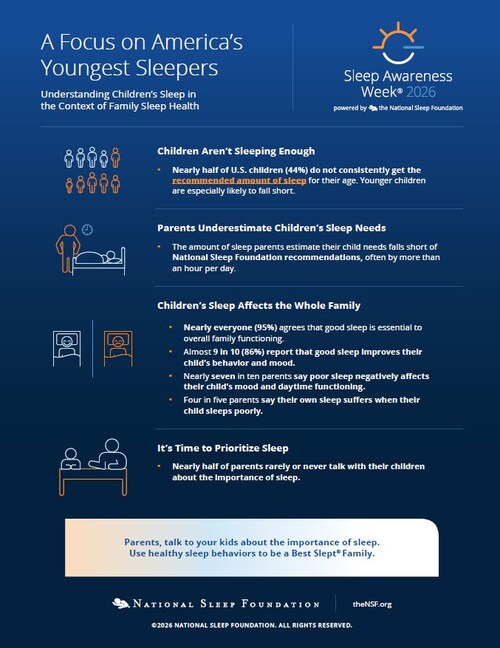
Children’s sleep is not a secondary concern. It is foundational. Sleep drives cognitive development, emotional regulation, immune function and academic performance in ways that shape outcomes for years. Research consistently shows that children in households experiencing parental stress, trauma or disrupted sleep patterns are at elevated risk for their own sleep challenges. For milVet families navigating the downstream effects of service — deployment cycles, relocation, PTSD, TBI, transition — awareness and education around children’s sleep is not optional. It is part of the mission.
If you are working on your own sleep, look left and right. The people around you — your partner, your caregiver, your kids — are part of this conversation too.
Where Every Member Can Start
Many of the most effective sleep interventions require no appointment and no prescription. Consistent wake times anchor circadian rhythm more effectively than any supplement. Structured pre-sleep routines signal the nervous system that the operational day is over. Meditation and breathwork techniques — particularly those targeting the parasympathetic nervous system — directly counter the hypervigilance that military service trains the body to maintain long after the mission has ended. Reducing alcohol and screen exposure in the hours before bed compounds these gains over time.
Some sleep challenges run deeper. For members managing PTSD, TBI, or chronic pain, the path forward may require clinical support — and that is not a failure, it is a finding. The first step is identification. Understanding what is actually driving disrupted sleep is what makes the right intervention possible. That is where education becomes the entry point — not to replace clinical care, but to give every member the awareness they need to recognize when self-directed strategies are working and when it is time to ask for more targeted support.
The milVet community does not need to be told sleep matters. They need a community that takes their sleep challenges seriously, meets them where they are, and gives them a clear path forward — whether that path starts tonight with a consistent wake time or leads toward the clinical support they have earned the right to access.
Sleep Awareness Week is that starting point.
Through our responsive content and dedicated support, MWi continues to serve the modern military and Veteran community by providing relevant, practical strategies for enhancing connection and wellness. Click below to see more articles: