
Reading time: 5 Minutes
MWi Hack:
- Before or just after a reunion, write down one expectation you had: what you thought it would feel like, or what you thought the first week back would look like. Then write one way the reality differed. You don’t have to share it with your partner, though you can. The point is to name the gap rather than absorb it silently. Most of the friction in the adjustment period comes from unspoken mismatches between what people expected and what they got.
MWi Summary:
- The reunion high is real and documented. The first days or weeks after a return from deployment or long separation are often genuinely good. That’s not the part that goes unaddressed.
- The emotional come-down that follows is equally documented. It’s not a sign that the relationship is broken. It’s a predictable stage of the reunion adjustment cycle.
- The returning service member and the family member at home experience the adjustment differently and often simultaneously, which means neither person’s experience is wrong even when they conflict.
- Research identifies the collision point: the person who was gone had structure and mission; the person who stayed had autonomy and a reorganized household. Neither wants to give up what they built.
- The adjustment period has a known timeline and known patterns. Naming those patterns makes them easier to work through.
- The things that help are less about solving problems and more about narrating what’s happening to each other while it’s happening.
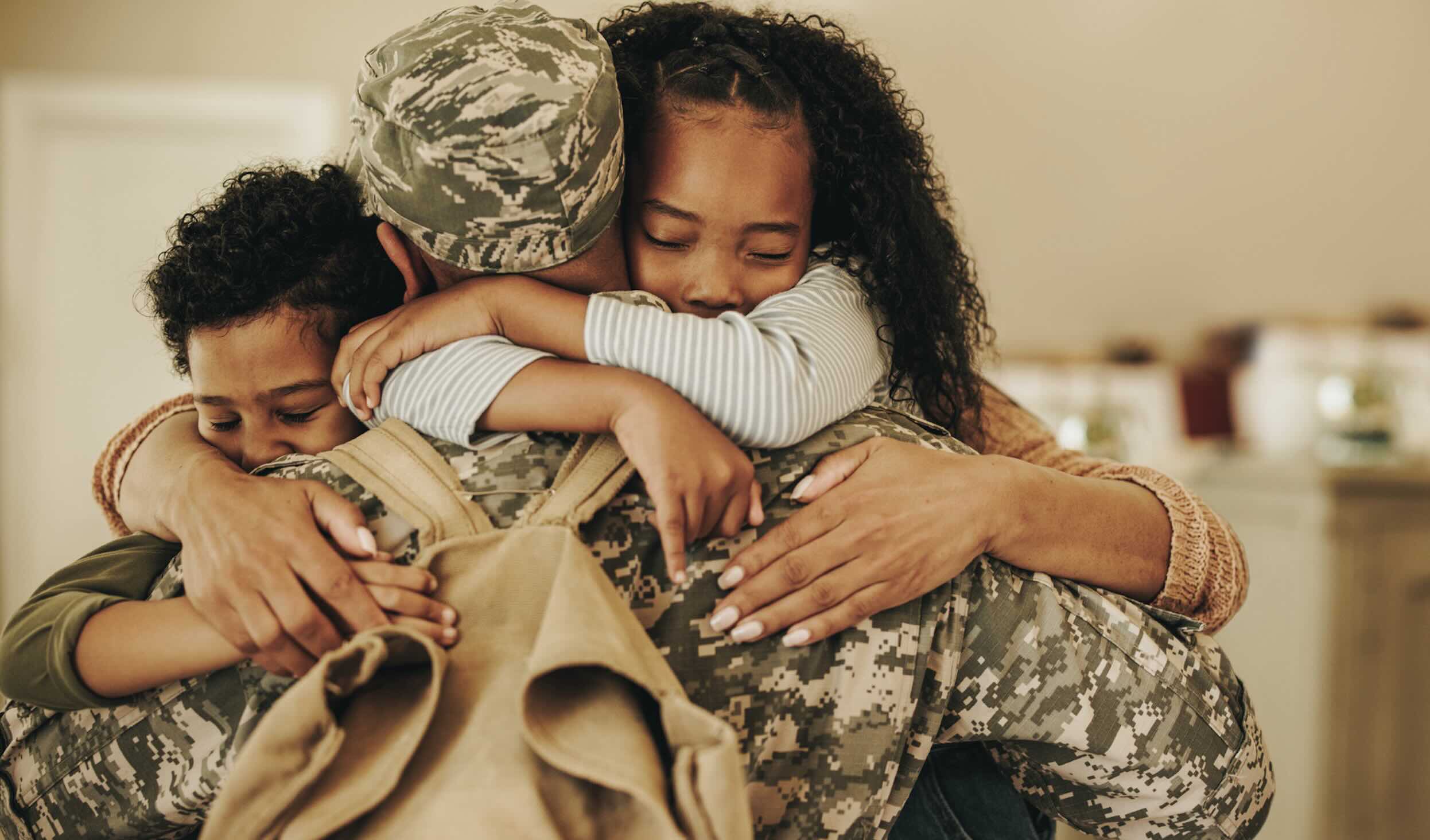
The homecoming footage gets shared. The terminal, the tarmac, the moment of recognition. Children who sprint across a gym floor. A spouse who had practiced keeping it together and didn’t. Those moments are real and they matter, and they are also the beginning of a process that is almost never shown in the footage.
What happens in the weeks after the welcome home is one of the least-discussed dynamics in military family life. Not because it’s shameful, but because it doesn’t fit the narrative arc that the public version of military reunion tends to tell. The arc goes: separation, hardship, reunion, resolution. The actual arc is longer, less linear, and includes a stretch in the middle that can feel, if you’re not expecting it, like something went wrong.
Nothing went wrong. But it helps to know what’s actually happening.
The Reunion Cycle
Research on military reunions, including work from the RAND Corporation, the FOCUS Project at UCLA, and the Journal of Military, Veteran and Family Health, identifies a consistent pattern. The initial reunion period is marked by heightened connection, relief, and genuine joy. The couple or family is together. The separation is over. That’s real.
What follows, usually within days to a few weeks, is an adjustment period that can feel more difficult than the separation itself. The person who was away is re-entering a household that reorganized around their absence. The person who stayed built systems, made decisions, and established routines. Both people are working through the gap between what they expected the reunion to feel like and what it actually feels like to share a space again after months apart.
Two Different Experiences, Happening at the Same Time
The returning service member often enters the reunion with a residual operational mindset: structured days, clear hierarchy, defined mission. The transition back to a household where decisions are negotiated rather than issued is a genuine adjustment, not a personal failure.
The family member who stayed often enters the reunion having managed everything alone for months. They made every call. They handled every crisis. The autonomy that was difficult to earn is also, by the time of reunion, genuinely theirs, and handing it back, even to someone they missed, can feel like a loss they weren’t expecting to feel.
Neither experience is wrong. They just happen simultaneously, in the same house, to people who love each other and expected to feel only relief.
The FOCUS Project’s research on military family resilience found that the collision point in reunions is typically not a specific conflict. It’s the mismatch between each person’s internal narrative of what this was going to be like. The partner who came home expected to return to a version of home that no longer exists in exactly that form. The partner who stayed expected the return to restore something that the time apart had already changed.
What the Research Says Helps
The interventions that show the most consistent benefit in reunion adjustment research are built around narrating what’s happening rather than managing it silently. Naming the adjustment period explicitly (this is the part where it’s harder than we expected, and that’s normal) reduces the interpretation that something is wrong with the relationship.
The FOCUS Project’s structured resilience curriculum, delivered to more than 50,000 military families, is built around this principle: communication skills, problem-solving, and the ability to tell each other what’s happening internally rather than performing the version of reunion that felt expected.
For families where one or both partners are managing mental health concerns, the adjustment period can make things harder. Military OneSource’s free counseling (up to 12 sessions per issue per year, fully confidential) is specifically available for reunion and reintegration concerns. Give An Hour connects military families to licensed mental health providers in the community.
The fact that the reunion is hard in this predictable way is not a reflection of the relationship or the people in it. It’s the cost of having been apart in the way that military service requires. The adjustment is the last mile of the deployment, not the beginning of something wrong.
Through our responsive content and dedicated support, MWi continues to serve the modern military and Veteran community by providing relevant, practical strategies for enhancing connection and wellness.
- FOCUS Project, Families OverComing Under Stress (focusproject.org): a UCLA-based program offering resilience skills training specifically for military families navigating deployment and reintegration. The structured curriculum has been delivered to more than 50,000 military families and is available through participating installations.
- Military OneSource (militaryonesource.mil): free, confidential counseling for service members, Veterans, and their families, up to 12 sessions per issue per year, no referral required. Reintegration and reunion adjustment are covered directly.
- Give An Hour (giveanhour.org): connects military community members and their families to licensed mental health providers offering free care. No VA connection or referral required, and available to family members and friends as well as service members and Veterans.
- American Psychological Association (apa.org): the APA’s resources on relationship adjustment, couples communication, and family transitions are publicly available and not military-specific, making them a useful entry point for family members, friends, and anyone outside the military community looking for research-backed guidance.
- RAND Corporation, Military Families and Deployment research (rand.org): RAND’s publicly available research on military family readiness, deployment cycles, and reunion adjustment is the evidence base behind much of what practitioners use. Useful for anyone who wants the data behind the dynamics this article describes.
Sources: RAND Corporation, Military Families and Deployment research; FOCUS Project (Families OverComing Under Stress), UCLA, reunion and reintegration resilience curriculum and outcomes research; Journal of Military, Veteran and Family Health, reunion adjustment studies; Military OneSource, reintegration resources. Original editorial synthesis for MWI.