
Reading time: 5 Minutes
MWi Hack:
- Pick one person you’d want next to you and send this text today: “Saturday morning. Trail. You in?” Don’t oversell it. Don’t make it a whole thing. The first text is the only hard part, and it’s lower than people think.
MWi Summary:
- The military hands every service member a structure they don’t fully appreciate until it’s gone: a built-in reason to be outdoors with other people, every single day. Civilian life doesn’t replace it automatically. Most of us never notice it was doing anything until we feel the absence.
- After the uniform comes off, the body’s default setting flips from mostly outside to almost entirely inside. Vitamin D production drops with it, and low levels are linked to fatigue, low mood, and poor sleep. Twenty minutes of actual daylight on your skin, a few times a week, costs nothing and addresses more than most Vets realize.
- Modern isolation doesn’t look like loneliness. It looks like a full group chat and an empty week. The same threat-scanning wiring that kept you alert in service is now pointed at a feed that never runs out. You close the app feeling worse and more wired than when you opened it. That’s not rest. That’s not connection.
- Vets are wired for side by side, not face to face. Coffee shop vulnerability on demand doesn’t come naturally, but walking shoulder to shoulder does. It’s how the real conversations happened on patrols, road marches, and walks back from chow. If a buddy is struggling, don’t invite them to talk. Invite them on a walk. The talk shows up on its own.
- The fix is almost embarrassingly simple: get outside, with someone, on a regular basis. Local options exist for Vets without a built-in crew. Team RWB, Sierra Club Military Outdoors, Warrior Expeditions, Irreverent Warriors hikes, the VFW, the American Legion — most of them free. The goal isn’t fitness, distance, or a destination. It’s sunlight, motion, and another human next to you.
There’s a particular kind of restlessness that hits after you take the uniform off. You can’t always name it. Some days it’s a buzz in the chest. Some days it’s the third hour you’ve spent on the couch with a phone in your hand, jumping between apps without remembering why you opened any of them. You’re not depressed, exactly. You’re not bored, exactly. You’re just… off.
Most of us figured out pretty quickly that civilian life doesn’t come with structure attached. No formations, no PT at 0530, no platoon sergeant breathing down your neck if you stay in bed. That freedom is the whole point of getting out. But it turns out the structure was doing more than we gave it credit for. It got us up. It got us outside. It got us moving with other people, every single day.
When that disappears, a lot of us start drifting toward two things that look like rest but aren’t: screens and isolation.
This isn’t a lecture. Plenty of folks reading this are already doing fine. But if any of the above hit a little close, hear me out for the next four minutes. The fix is one of the most boring, obvious things in the world, and it works.
Go for a walk. Bring someone.
That’s it. That’s the article.
Okay, not quite. Let me explain why something this simple ends up doing so much heavy lifting for Veterans specifically.
The body remembers being outside
For however many years you wore the uniform, you spent a lot of time outdoors. Ruck marches. Field problems. Smoke pits. PT. Standing around motor pool. Patrols. Even the boring stuff — waiting for buses, waiting for chow, waiting to wait — happened under open sky. Your body got used to sunlight, weather, and movement as the default state. Air conditioning and fluorescent lights were the exception.
Then you get out, and the proportions flip. You’re inside almost all the time. Office, car, couch. Maybe the gym, but a gym is still four walls. The body notices. Vitamin D production drops when you’re inside all day. Low levels are linked to fatigue, low mood, and poor sleep. Twenty minutes of actual daylight on your skin, a few times a week, costs nothing.
You don’t have to summit anything. A neighborhood loop counts. A path along a creek counts. The dog park counts.
Screens are the new isolation
We talk about Veteran isolation like it’s about not having friends nearby. Sometimes it is. But more often, in 2026, isolation looks like this: you do have friends. You have a group chat. You “stay in touch.” You see what everyone’s doing on Instagram. And somehow you haven’t actually been in the same room as another human, outside of work or your household, in weeks.
Doomscrolling hits different for Vets. The algorithm figures out what gets a rise out of you and keeps feeding it. Politics, current conflicts, or military news. The same wiring that kept you scanning for threats in service is now aimed at a feed that never runs out. You close the app feeling worse and more wired than when you opened it. That’s not rest. That’s not connection.
A walk strips all that off. Phone in pocket. Eyes up. Ears open. Even thirty minutes of that resets something.
Side by side beats face to face
Here’s a thing that took a lot of us a while to understand: most Vets are bad at “let’s grab coffee and talk about how we’re doing.” Sitting across a table, eye contact, vulnerability on demand. It doesn’t come naturally to most of us, and frankly, it shouldn’t have to.
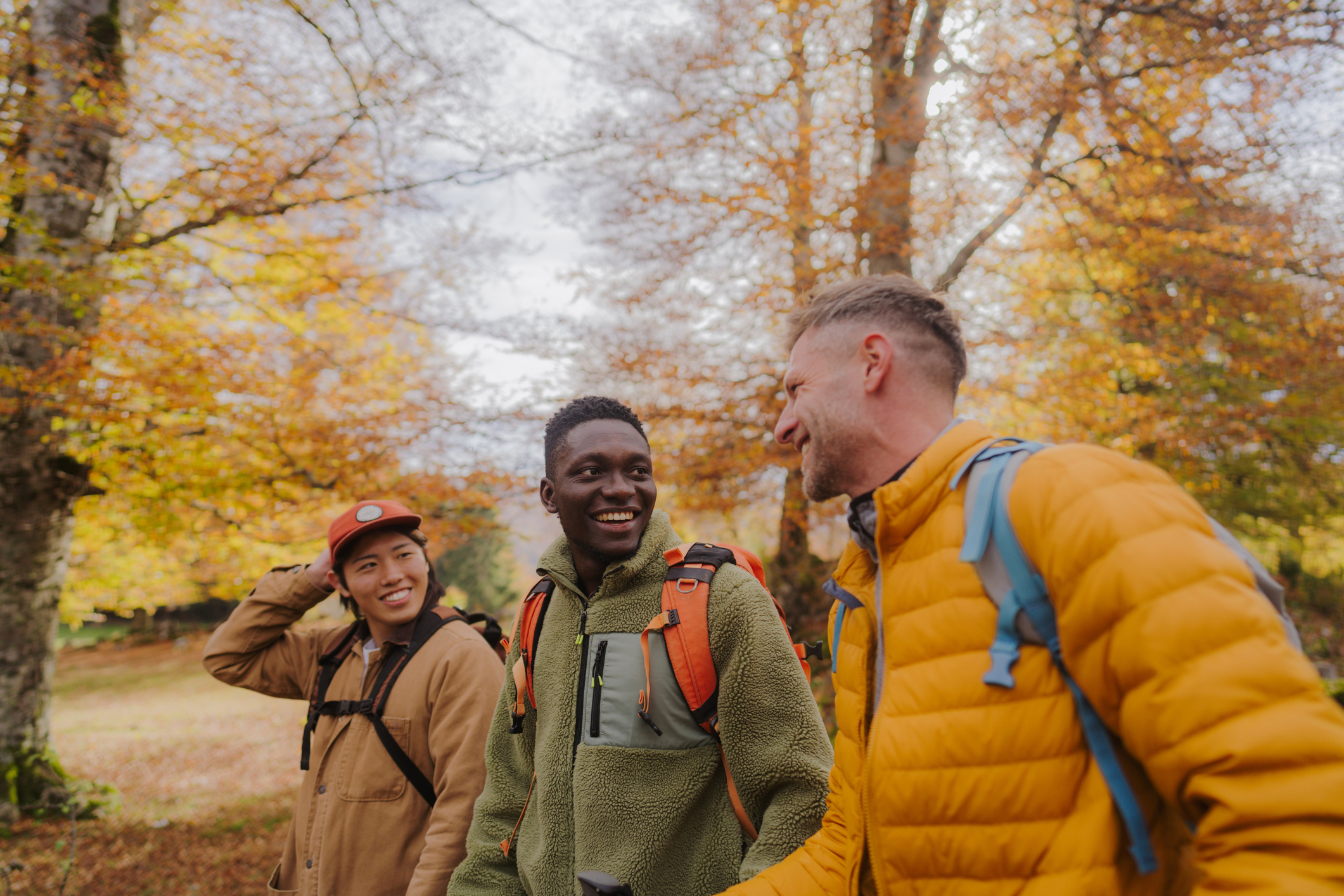
But walking next to someone? Totally different. You’re both looking forward. The conversation has natural pauses, because you’re moving and noticing things. You can bring up something heavy and then drop it for a minute while you point out a hawk. You can be quiet without it being awkward, because you’re doing something together.
This is exactly how a lot of us communicated in service: on a patrol, on a road march, walking back from chow. Shoulder to shoulder, not eyeball to eyeball. It’s why ranges, fishing trips, and long drives have always been where the real conversations happen.
If you’ve got a friend who’s struggling, don’t invite them to talk. Invite them on a walk. The talk will come on its own.
How to actually do this
The hardest part is the first text. Pick one person — somebody you served with, somebody from your unit, a neighbor, your spouse, your kid. Send a short message: “Saturday morning. Trail. You in?” Don’t oversell it. Don’t make it a whole thing.
A few things that help:
- Make it recurring. A standing Sunday hike is easier to keep than a one-off. People show up when they know it’s a thing that happens.
- Keep the bar low. Two miles is plenty. The goal is to be outside with someone, not to crush an objective.
- Find a local group if you don’t have anyone. Team RWB, Sierra Club Military Outdoors, Warrior Expeditions, Irreverent Warriors hikes, your local VFW or American Legion post (most run outdoor events, and most are free).
- Bring the dog. Bring the kid. Bring the spouse. Bring the new neighbor who just moved in. The bigger the circle gets, the more reliable the routine becomes.
You don’t need fancy gear. You don’t need a destination. You don’t need to talk about anything in particular. You just need to be outside, moving, with someone else.
The point
The military gave most of us something we didn’t fully appreciate until it was gone: a built-in reason to be outdoors with other people. Getting that back — even in small, deliberate doses — quietly addresses a startling number of the things that chip away at us after service. Sleep. Mood. Energy. Loneliness. The feeling of having a tribe.
It’s not therapy, and it’s not a substitute for it. But it’s one of the few things in this world that costs nothing, takes no equipment, and delivers something real every time you do it.
Put the phone down. Lace the boots. Text the buddy.
Hit the trail.