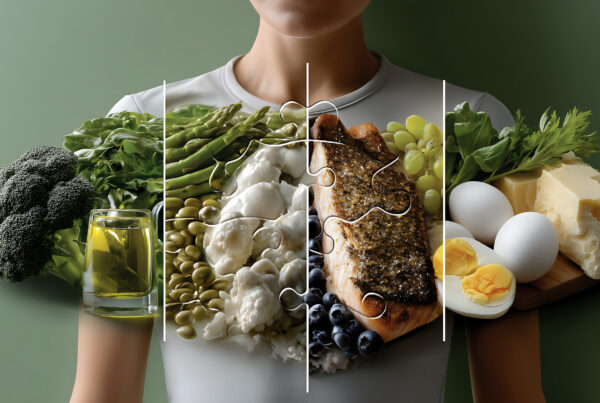


”Question: Can what you eat lower your cancer risk — and why is that harder for some people than others?
Reading time: 5 Minutes
MWi Hack:
- Add one plant-based food to every meal this week — beans, fruit, leafy greens, or whole grain — because the fiber and phytochemicals they deliver are among the most evidence-backed dietary shifts for reducing colorectal and overall cancer risk, and the habit compounds over time.
MWi Summary:
- Colorectal cancer is the second leading cause of cancer death in the US, yet research suggests up to half of cases may be preventable — and diet is one of the most modifiable factors within your control.
- Fiber feeds the gut microbiome, which communicates directly with the brain through the gut-brain axis — meaning what you eat affects not just colon health, but mood, stress response, and mental resilience too.
- Processed and red meat are classified as Group 1 and Group 2A carcinogens by the WHO — limiting them is one of the clearest, most evidence-backed dietary actions for cancer risk reduction.
- For Veterans and others managing multiple service-connected or chronic conditions, eating well isn’t a personal failure — it’s a complex equation involving prescription diets, fixed income, rural food access, and family dynamics that all need to be solved at once.
- Social support meaningfully improves the odds of lasting dietary change — connecting with peers who face the same food challenges generates practical, usable solutions that work alongside, not instead of, professional guidance.
March is National Colorectal Cancer Awareness Month. It’s an invitation to think about something that affects all of us every single day: what we eat, and what that does — quietly, cumulatively — to our long-term health.
Colorectal cancer is the second leading cause of cancer death in the United States, with roughly 153,000 new diagnoses each year. The science suggests up to half of those cases may be preventable through lifestyle changes. Diet sits near the top of that list — and the same dietary patterns that protect your colon also lower risk for breast, stomach, lung, and esophageal cancers. The gut is not just a digestive organ. It is, in many ways, a command center.
Your gut talks to your brain
Here’s something worth understanding: your gut bacteria communicate directly with your brain through a pathway called the gut-brain axis. This isn’t a metaphor — it’s a real biological mechanism involving the vagus nerve, immune signals, and chemical messengers produced by the microbiome. The bacteria living in your colon influence your mood, your stress response, and your overall mental health. The same ultra-processed foods, excessive sugar, and inflammatory oils that raise your risk for diabetes and obesity also disrupt the beneficial bacteria that keep that communication system healthy. It’s a dual effect — physical and mental — running through the same dietary choices.
Fiber is what feeds the good bacteria. When fiber ferments in the colon, it produces short-chain fatty acids like butyrate, which actively work to suppress tumor growth. Fiber also speeds up the transit of waste through the colon, which matters because carcinogens — substances that can trigger cancer — spend less time in contact with the colon wall when things keep moving. Research consistently links higher fiber intake with meaningfully lower colorectal cancer risk. The average American eats about 15 grams of fiber per day; the target is 25–38 grams. Closing that gap doesn’t require a major overhaul: swap white bread for whole grain, stir a can of lentils into a soup, add an apple to your afternoon.
The meat question
Processed meats — bacon, deli meat, sausage, hot dogs — are classified as Group 1 carcinogens by the World Health Organization. Red meat sits in Group 2A: probably carcinogenic. The risk comes from nitrates used in curing, heme iron, and compounds formed when meat is cooked at high temperatures. These interact with the colon lining over time. No single meal causes cancer — but pattern and frequency matter. Shifting processed meat from a daily habit to an occasional one is one of the most direct, evidence-backed changes a person can make for long-term colorectal health.
Color on your plate
Brightly colored plants carry antioxidants and phytochemicals that protect cells from the kind of oxidative damage that can begin the cancer process. Tomatoes carry lycopene. Broccoli and cauliflower produce sulforaphane. Onions and apples deliver quercetin. Berries are dense with anthocyanins. Together, they act like a cellular maintenance crew — not a cure, but a steady, daily form of protection. A practical target: five different colors of plants across the day. Blueberries at breakfast, spinach at lunch, red pepper and tomato at dinner covers most of the spectrum without needing a recipe.
When eating well is harder than it looks
It’s worth naming something directly: for many people in this community — veterans managing multiple service-connected conditions, those living on fixed disability incomes, people in rural areas far from a well-stocked grocery store — healthy eating isn’t a matter of willpower. It’s a complex equation. Prescription diets for conditions like IBS, diabetes, or Gulf War Syndrome gastrointestinal issues collide with fixed incomes and food prices that have risen significantly in recent years. Specialty foods may not be available locally. Family members may not understand why “normal food” isn’t an option. These are structural barriers, not personal failures, and they deserve to be named as such.
That context matters when we think about solutions. The most useful changes are the ones that are actually available. Canned beans and lentils are inexpensive, shelf-stable, and among the highest-fiber foods you can buy. Frozen vegetables retain most of their nutritional value and cost less than fresh. An apple travels well. These aren’t compromises — they’re genuinely good choices that work within real constraints.
The role of connection
Research on social support and health behavior change consistently shows that people do better when they’re not navigating alone. Connecting with others who face the same food challenges — the same prescription restrictions, the same budget pressures, the same family dynamics — generates practical solutions that generic advice often can’t. This is a complement to professional guidance, not a replacement for it. A dietitian or physician who knows your full medical picture is irreplaceable. But a peer who found a way to make a low-FODMAP meal on a $40 weekly budget? That’s a different kind of knowledge, and both matter.
Cancer prevention is not about perfection. It’s about direction and consistency. Each plant-rich meal, each day less of processed meat, each conversation that helps someone find a path forward — these compound, quietly, over time. That’s how prevention works. And this month is a good time to start.
Through our responsive content and dedicated support, MWi continues to serve the modern military and Veteran community by providing relevant, practical strategies for enhancing connection and wellness.