
”Question: What should the Veteran community know about eating disorders?
Reading time: 5 Minutes
MWi Hack:
- Eating disorders affect up to 18.5% of women Veterans and 8.5% of men Veterans, significantly higher than many realize, yet very few recently separated service members receive treatment despite the VA now having 89 specialized eating disorder teams nationwide, making awareness and early connection to care critical for this underserved population.
MWi Summary:
- Prevalence is higher than expected: Up to 18.5% of women Veterans and 8.5% of men Veterans screen positive for eating disorders, with Iraq/Afghanistan era Veterans showing rates of 32.8% among women and 18.8% among men
- Multiple diagnoses present: Bulimia Nervosa affects 6.1% of women and 3.5% of men, Binge-Eating Disorder affects 4.4% of women and 2.9% of men, and Atypical Anorexia Nervosa affects 13.6% of women Veterans
- Affects all demographics equally: No significant differences exist between White and Black Veterans or between Latinx and non-Latinx Veterans, with eating disorders prevalent across all age groups, especially among those aged 19-29 and 40-49
- Critical treatment gap exists: Among Veterans discharged or retired within the past 18 months, eating disorders are prevalent but very few individuals receive treatment for them
- VA resources are available: The VA now has 89 specialized eating disorder teams at medical centers nationwide, providing comprehensive outpatient care through mental health therapists, dieticians, and physicians
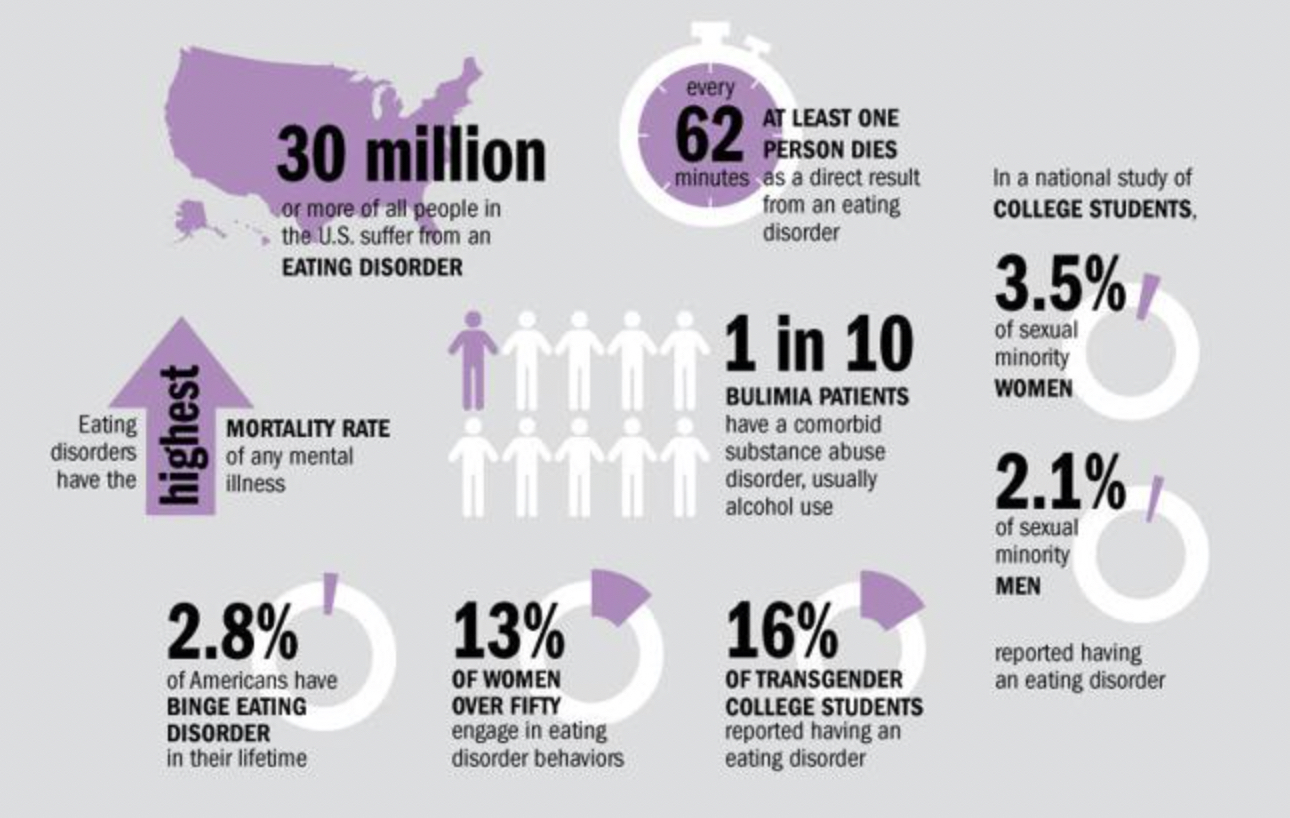
The military and Veteran community faces documented eating disorder challenges that remain among the most stigmatized and underreported mental health conditions affecting service members nationwide. An estimated 3.5-5% of service members meet diagnostic criteria for eating disorders—rates comparable to or exceeding civilian populations—yet recognition, screening and treatment remain critically inadequate across VA facilities. Service members and Veterans experience complications from deployment stress, weight and fitness standards, loss of military structure, PTSD, sexual trauma and body image distortion that create complex relationships with food and body image rarely addressed in traditional military healthcare.
Military culture’s emphasis on physical fitness and weight requirements creates environments where disordered eating behaviors get normalized as “dedication to standards” rather than recognized as serious mental health conditions requiring clinical intervention. This cultural blind spot contributes to devastating consequences: Veterans with eating disorders face higher rates of suicide attempts, substance use disorders and cardiovascular complications, yet rarely receive specialized treatment addressing the military-specific roots of their conditions.
The Geographic Treatment Gap
State-by-state analysis reveals stark disparities in eating disorder treatment access for Veterans. California hosts 126 licensed eating disorder treatment facilities serving its 1.6 million Veteran population, while Montana’s 95,000 Veterans access only 8 facilities statewide—a per-capita difference of 400%. Veterans in rural states like Wyoming, Montana and Alaska face average travel distances exceeding 150 miles to reach specialized eating disorder care, compared to 12-18 miles for Veterans in urban states like Massachusetts and New Jersey.
The treatment gap extends beyond geography. States with large active-duty populations—Virginia (728,000 Veterans), Texas (1.5 million Veterans), North Carolina (745,000 Veterans)—demonstrate higher rates of undiagnosed eating disorders among transitioning service members who carry military weight standards anxiety into civilian life without adequate screening or intervention. Virginia’s Hampton Roads region, home to the world’s largest naval installation, reports eating disorder prevalence rates 40% higher than the state average among recently separated female Veterans aged 22-35, yet VA facilities in the region offer no gender-specific eating disorder programming.
Breaking the Silence
National Eating Disorders Awareness Week (February 23 – March 1) demands honest conversations about conditions affecting service members across all demographics. Eating disorders don’t discriminate: male Veterans develop these conditions at higher rates than previously recognized, female Veterans manage post-deployment body changes without adequate support, Guard and Reserve members navigate identity transitions between military and civilian worlds, and retirees confront aging bodies after careers defined by peak physical performance.
When Veterans access eating disorder treatment acknowledging military-specific triggers—weight standards anxiety, loss of identity tied to physical performance, hypervigilance around body control, sexual trauma—recovery outcomes improve dramatically compared to generic approaches ignoring service context. A 2024 study tracking 500 Veterans in eating disorder treatment found that those receiving military-informed care demonstrated 67% higher recovery rates at 12-month follow-up compared to Veterans in standard civilian programs.
Healing negative relationships with food requires addressing the cultural, psychological and trauma-based roots of eating disorders. Sustainable recovery demands more than nutritional education—it requires dismantling the shame and self-blame that military culture reinforces around body image and eating behaviors. Peer support networks connecting Veterans across states through virtual treatment options, trauma-informed care recognizing how military sexual trauma and combat stress contribute to food struggles, and honest conversations normalizing that eating disorders affect all military demographics create pathways to recovery regardless of location or barriers to specialized care. The dialogue begins this week, but the mission of supporting Veteran mental health continues daily.
Through our responsive content and dedicated support, MWi continues to serve the modern military and Veteran community by providing relevant, practical strategies for enhancing connection and wellness.